Parking near bus stops
Clearance rules before and after a bus stop sign.
Last reviewed by NSW Parking Rules editorial team:
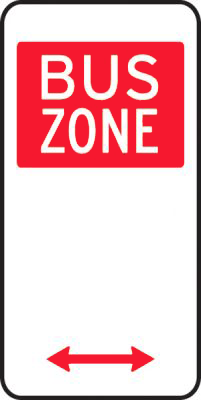
Bus stop clearance rules mean you should not park close to a bus stop unless a sign clearly allows it.
If this rule is connected to a fine
Overview
Bus stop clearance rules keep buses close to the kerb so passengers can board safely. They can matter even when there is no separate Bus Zone sign beside the exact space.
What the rule means
Bus stop clearance rules mean you should not park close to a bus stop unless a sign clearly allows it.
Practical details
Official detail
Official NSW guidance shows clearance before and after bus stop signs so buses can enter and leave the stop safely.
What to check on the street
Look for the bus stop pole first, then check whether marked spaces or signs change the default clearance.
Everyday example
Parking just before the pole can force a bus to stop away from the kerb, making boarding harder for passengers.
First checks to make on the street
- Read the nearest sign face, including arrows, days and times.
- Look for the bus stop pole first, then check whether marked spaces or signs change the default clearance.
- You are parking before or after a bus stop sign.
- Do not rely on this common shortcut: only looking for a bus zone sign.
When the rule applies
- You are parking before or after a bus stop sign.
- There is no sign or marked bay allowing ordinary parking.
- The kerb space is needed for buses to enter or leave the stop.
Examples
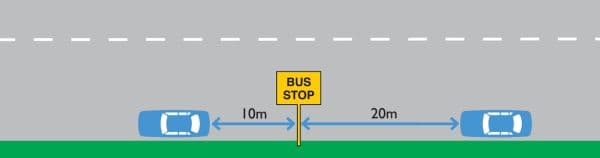
- Parking immediately before a bus stop pole.
- Stopping just after a bus stop because no bus is visible.
- Using a bus stop area for a quick passenger pick-up.
Common mistakes
- Only looking for a Bus Zone sign.
- Assuming bus stop rules apply only during peak times.
- Forgetting that buses need space to pull in and out safely.
Exceptions
- A sign may expressly allow parking in a marked space.
- Public buses and authorised vehicles may have specific permissions.
- Police or authorised traffic controllers can direct traffic differently.
Fines and penalties
Possible penalties depend on the current offence code, location, time and evidence. Check the notice itself and official NSW sources.
What to do if you receive a fine
Read the notice, check the sign and location details, gather photos or permits, then decide whether to pay or request a review.
- Check whether the notice names Parking near bus stops or a related offence.
- Compare the notice time and location with photos of the sign, road marking or kerb layout.
- Keep any permit, ticket, payment record, loading record or written authority if it changes the answer.
- Use Revenue NSW or the authority named on the notice for payment and review steps.
Related parking rules
Related parking signs
Official sources
Use these official sources to confirm the current rule, fine amount, sign wording or local council condition before relying on a parking decision.
- Transport for NSW
Official transport guidance and road user information for New South Wales.
- NSW legislation
Official NSW legislation source for road rules and statutory instruments.
General information only.
This guide is independent and does not replace NSW legislation, the sign at the kerb, your penalty notice or advice from the relevant authority.